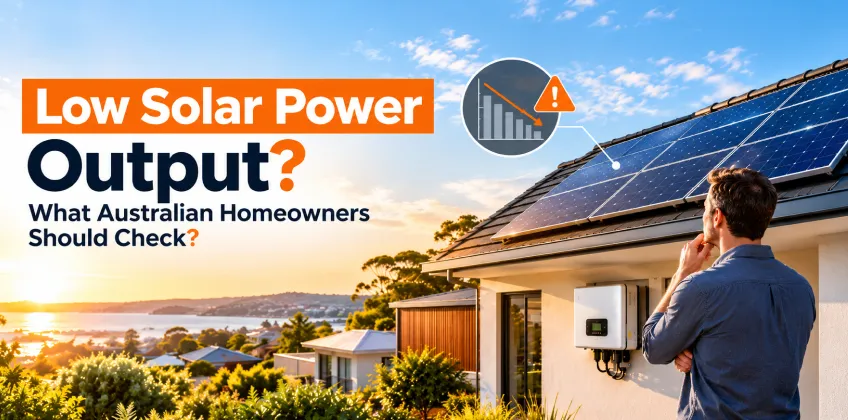
Low Solar Power Output? What Australian Homeowners Should Check?
- Low solar panel output does not always mean something is wrong.
- Weather, seasonal changes, shading, and monitoring issues can affect your readings.
- Check your generation records, app updates, and inverter messages.
- Grid exports are different from total solar generation.
- Contact your installer if output stays unusually low under comparable conditions.
- Leave roof access, panel cleaning and electrical repairs to qualified professionals.
Low solar panel output usually comes from cloud, winter, shade, dirt or an app that's stopped updating. One low reading isn't a fault. Compare days with similar weather, then call your installer if the drop continues.
Seeing a low number in your solar app can be a worry. Usually, low solar panel output comes down to weather, the season, shade or a monitoring glitch. A solar system not performing for days on end in good sun is different. Here's what you can safely check from the ground.
Is Your Solar System Underperforming or Is the Change Normal?
It's probably normal if generation is close to other days with similar weather and season. If it stays well below those days in good sun, something may be wrong.
- kW (kilowatts): the power your system makes at one moment. System size is also shown in kW, like a 6.6kW solar system.
- kWh (kilowatt-hours): electricity made over time, shown as your app's daily total and on your power bill.
The expected generation from a residential solar system depends on its location, roof layout and system design. Roof direction, shade and weather change the numbers, so same-sized systems won't always match.
Six Safe Checks for Low Solar Panel Output
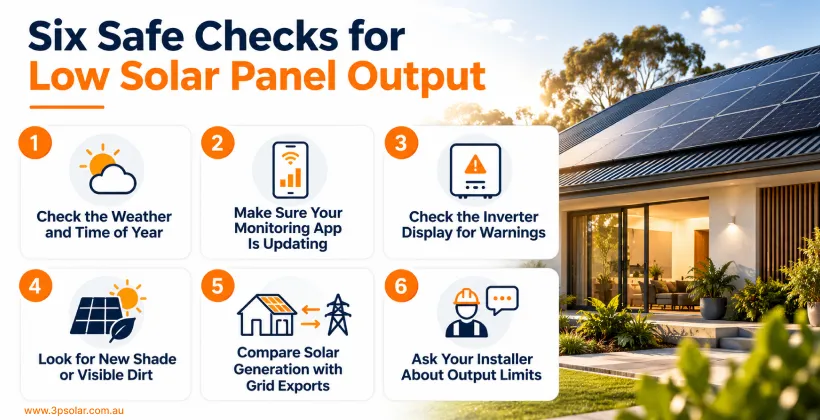
Try these first. None of them need you to get on the roof or open any equipment.
1. Check the Weather and Time of Year
Panels still make some power under cloud, but most of it comes on clear days with direct sun. Winter days are shorter, and very hot days can trim output slightly. Don't compare a drizzly winter arvo with your best day in January.
2. Make Sure Your Monitoring App Is Updating
- Check the "last updated" time in the app.
- Check your Wi-Fi and the inverter is still connected to it.
If the app has dropped out, your panels may still be generated.
3. Check the Inverter Display for Warnings
Look for a status message or error code on the inverter screen or in the app. Take a photo with the date, but don't open the inverter or try to fix yourself.
4. Look for New Shade or Visible Dirt
From the ground, look for:
- trees that have grown since installation
- new building work next door
- leaves, bird droppings or heavy dust on the panels
Leave roof access, cleaning and tree trimming to qualified people. Government guidance warns that cleaning your own panels can be dangerous.
5. Compare Solar Generation with Grid Exports
Power used at home or stored in a solar battery is never exported. Lower exports or smaller feed-in credits alone aren't proof of a solar system underperforming. Check total generation (kWh) instead.
6. Ask Your Installer About Output Limits
- Inverter clipping: many inverters are sized slightly smaller than the panels, so on bright middays the generation graph can flatten at the inverter's limit.
- Export limits: your network may cap how much power you can send to the grid.
Neither is a fault. If a limit may explain your low solar panel output, ask your installer rather than changing settings yourself.
When Should You Contact Your Solar Installer?
Contact your retailer or installer when a drop is sustained, unexplained or comes with a fault message. If you notice your solar system not performing as expected across comparable sunny days, it's time to make the call.
Call them if you see:
- a steady decline compared with days of similar weather
- no generation recorded in good daylight
- repeated inverter faults or visible equipment damage
Have this ready:
- screenshots of your daily generation
- dates and weather conditions
- your system size, inverter brand and installation date
- any error codes or messages

Why Choose 3P Solar?
Here's how 3P Solar supports you:
- NETCC Approved Seller: we follow the New Energy Tech Consumer Code, which sets standards for clear information, fair sales and consumer protection.
- Personalised system design: based on your roof, electricity use and energy needs.
- Clear performance expectations: we explain expected generation and its limits, without promising every home the same result.
- After-sales support: we help you read your monitoring data and work out the right next step.
Outgrown an older system? Compare our solar packages, with no obligation.
FAQs
Shorter days, lower sun angles and seasonal shading can reduce generation. Compare results with your system's seasonal estimates.
Yes, clouds reduce available sunlight, so lower generation does not necessarily indicate a fault.
Not necessarily. Credits depend on exports and tariffs. Electricity used at home or stored in a battery is not exported.
Delayed updates or connection issues may affect readings. Check the last update time and any accessible inverter display.
Professional cleaning may help when dirt contributes to reduced generation. Avoid accessing the roof yourself.
Report persistent, unexplained generation drops or repeated inverter faults. Leave electrical inspections and repairs to qualified professionals.