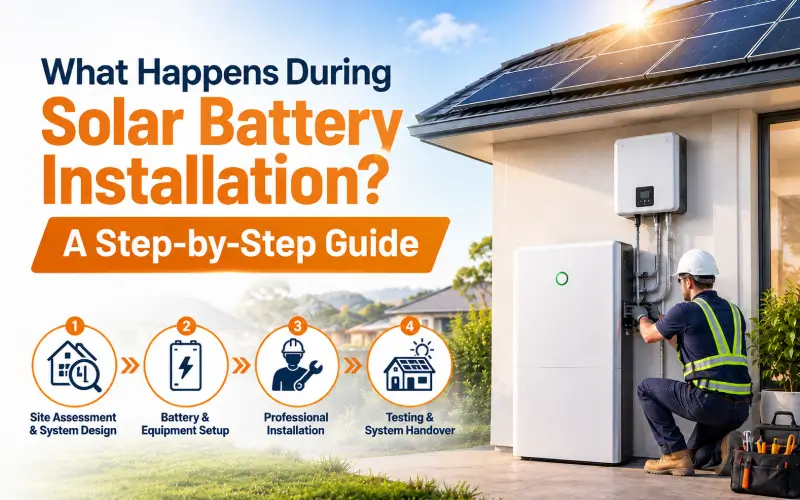
What Happens During Solar Battery Installation? A Step-by-Step Guide
Solar battery installation involves a site assessment, a network approval step with your local distributor, an installation day covering mounting, wiring and testing, and a final sign-off. Only an SAA-accredited installer with a licensed electrician can legally carry it out.
If you're close to booking a solar battery, it's natural to want to know exactly what installation day looks like before you commit. Here's what actually happens, from your first quote through to switching the system on.
What Happens Before Installation Day?
Before anyone touches your roof or switchboard, your installer needs to plan the job properly. This starts with a site assessment, where they check your roof, switchboard and the space available for your solar battery system, since batteries have strict placement rules.
Battery Placement Rules
According to energy.gov.au, there are specific rules about where a battery can be installed, including restrictions on the wall material it's attached to and minimum distances from habitable spaces, doors and windows. Your installer will factor these into your quote and system design, not decide them on the day.
Your installer will also confirm whether your battery will be AC coupled or DC coupled with your solar system, which affects how the components are wired together. If you're installing solar and a battery at the same time, either method can be used.
Once you accept a quote, your retailer or installer typically lodges a connection application with your local distribution network service provider (DNSP). How long this approval takes varies significantly between states, territories and even network areas, according to energy.gov.au's connection guidance, so ask your installer for a realistic timeframe rather than assuming a fixed number of days.
What Happens On Installation Day?
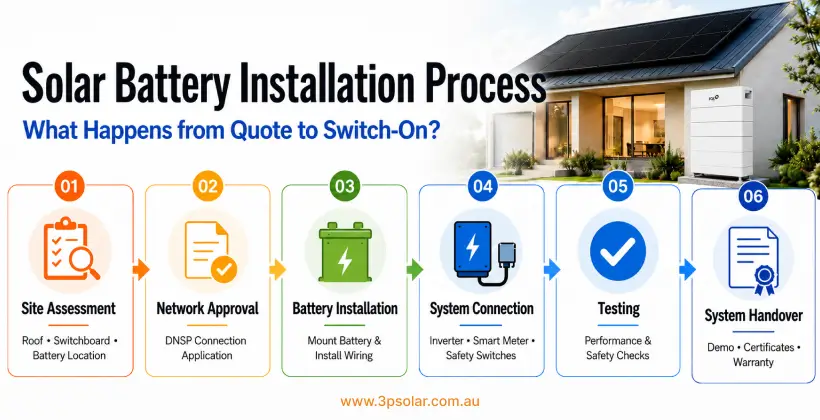
According to energy.gov.au's “Installation day and after” guidance, an accredited installer must be present throughout, and you should check their accreditation before work starts. Equipment is sometimes delivered the day before. For solar generally, the government notes installation can take 1 to 3 days depending on system size and complexity, though the connection and approval steps either side of it can take longer and vary by state and network area.
For a battery, a typical installation day includes:
- Mounting the battery in the pre-approved location, following the placement rules confirmed at quote stage
- Running and connecting the wiring between your battery, inverter and switchboard
- Installing isolation switches as required
- Connecting to your smart meter where relevant
- Testing the complete system to confirm it's working correctly
- A demonstration so you understand how to monitor and use your system
Signing off the paperwork, including your electrical safety certificate, warranty documentation, and anything needed to claim your Small-scale Technology Certificates (STCs) under the Cheaper Home Batteries Program
The Clean Energy Regulator gives the same advice: confirm your installer's accreditation and licence details on the day itself, before work begins, not just at quote stage.
Who's Actually Allowed to Install Your Battery?
This is worth checking regardless of who you book with. Under the current rules, your battery installation must be undertaken by, or supervised on-site by, a battery installer accredited by Solar Accreditation Australia (SAA), and the electrical wiring must be completed by a licensed electrician in your state or territory. This isn't a DIY job: incorrectly installed batteries are a genuine fire and electrical safety risk, which is exactly why accreditation and licensing requirements exist.
AC Coupled Battery vs DC Coupled Battery: What's the Difference?
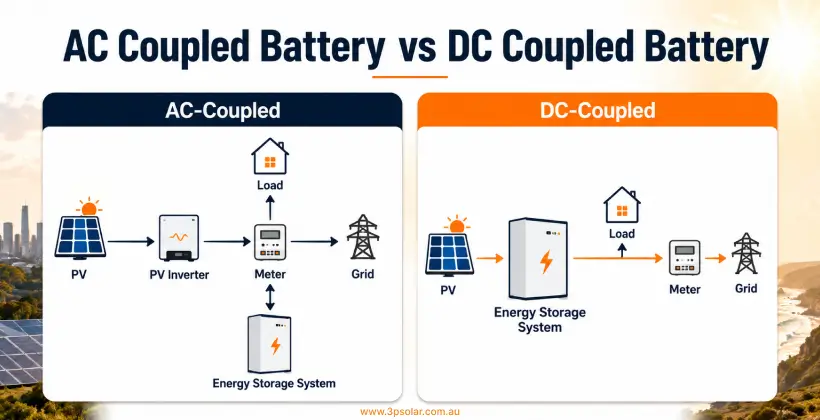
You'll likely hear this term during your quote, so it's worth understanding at a glance.
| Type | How it works | Common use case |
|---|---|---|
| AC Coupled | Battery connects via its own inverter, alongside your existing solar inverter | Often simpler to retrofit onto an existing solar system |
| DC Coupled | Battery shares a single hybrid inverter with your solar panels | Common when installing solar and a battery together from scratch |
Your installer will recommend the right option based on whether you already have solar, your existing inverter, and your household's usage.
Does Installation Affect Your Rebate?
Yes. Under the ACTIVE, Cheaper Home Batteries Program, your retailer, designer and installer are required to provide written statements confirming the battery and installation comply with relevant Commonwealth, state and territory requirements and standards. On-grid battery systems also need virtual power plant (VPP) capability under the program. Your installer should walk you through these requirements as part of the process, not leave them for you to research afterwards.
What Should You Check Before You Book?
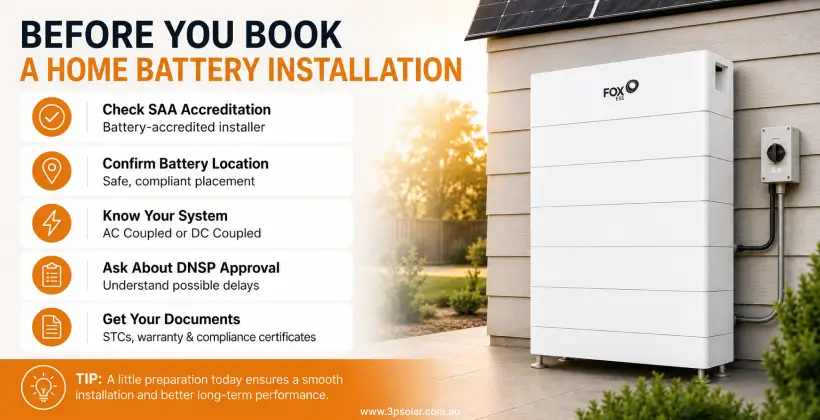
- Confirm your installer is SAA-accredited for battery installation specifically, not just solar panels
- Ask where the battery will be positioned and why, based on the placement rules above
- Confirm whether your system will be AC or DC coupled and what that means for your setup
- Ask what happens if your DNSP approval is delayed
- Confirm what paperwork you'll receive after installation, including anything related to your STCs

Key Takeaways
- Installation starts well before the day itself, with a site assessment and DNSP connection application
- Battery placement is governed by real rules on wall material and clearances, not just convenience
- Only SAA-accredited installers and licensed electricians can legally carry out the work
- On-grid batteries installed under the Cheaper Home Batteries Program need VPP capability
- Ask to see your installer's accreditation and licence on the day, not just at quote stage
Frequently Asked Questions
No. Battery installation must be carried out by, or supervised on-site by, an SAA-accredited battery installer, with wiring completed by a licensed electrician. This is a safety requirement, not just best practice.
The installation itself is often 1 to 3 days for a comparable solar job, per government guidance, but the connection approval before and after it can add more time depending on your state and network area. Get a specific estimate from your installer for your address.
Confirm your installer's accreditation and licence details before work begins, as recommended by the Clean Energy Regulator, and make sure the battery is being placed where your quote specified.
Not necessarily. It depends on whether your system will be AC coupled (battery uses its own inverter) or DC coupled (battery shares your solar inverter), which your installer will assess.