Do Solar Batteries Require Frequent Maintenance?
- Modern lithium solar batteries generally need little hands-on maintenance.
- Monitor system alerts and keep the surrounding area clear.
- Follow the manufacturer's instructions, installer advice and relevant local servicing guidance.
- Leave electrical inspections and repairs to qualified professionals.
- Battery lifespan depends on temperature, chemistry and usage. Appropriate care supports operation but cannot prevent normal ageing.
No. Modern lithium-ion home batteries are low maintenance, but that doesn't mean no maintenance. Solar battery maintenance for most homeowners means checking the app, keeping the area clear and booking a professional service when your installer or manufacturer recommends it.
Good news first: you won't be out in the shed every weekend fussing over your battery. Most household batteries are lithium-ion, and they need little hands-on care. A modern solar battery system generally needs straightforward monitoring and care rather than frequent hands-on attention.
Knowing how to maintain a solar battery comes down to one split:
- You: simple visual checks and keeping an eye on the app.
- A licensed electrician or accredited installer: anything electrical.
How Often Do Solar Batteries Need Maintenance?
There's no single rule for every home. How often your battery needs attention depends on:
- the manufacturer's maintenance instructions
- the battery type, where it's installed and the conditions around it
- your installer's recommended schedule and any local government guidance
Day-to-day solar battery maintenance is just you noticing things. Solar battery servicing is a scheduled visit from a professional. As one example, the South Australian Government says your installer or a licensed electrician should service your battery storage system every 12 months. That's SA guidance, not a national rule, so check what applies to your system.
How to Maintain a Solar Battery Safely?
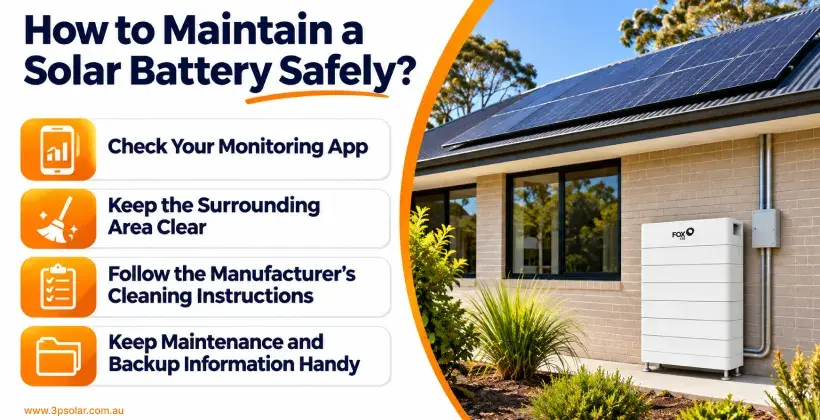
These checks take a few minutes and don't involve opening anything.
Check Your Monitoring App
Your app should show the battery charging and discharging regularly. Every week or so, glance at:
- the charge level across the day
- when it charges from solar and when it powers the house at night
- any alerts or warning messages
If something looks off, screenshot it and report it to your installer. Don't try to diagnose it yourself.
Keep the Surrounding Area Clear
Batteries need space around them for access and ventilation. So:
- don't store anything on top of the battery
- keep boxes, garden gear, the esky and anything flammable well away from it
- keep metal tools and other objects that conduct electricity clear
Follow the Manufacturer's Cleaning Instructions
Check now and then for dirt, cobwebs, insects or critters moving in. Only do the external cleaning your user manual allows. Never open the enclosure, touch the connections or attempt internal maintenance.
Keep Maintenance and Backup Information Handy
Keep these together in one folder or email:
- the user manual and installation documents
- warranty information
- service records
If your home uses solar battery backup, ask your installer how its backup function should be checked. A battery only powers your home in a blackout if it's set up to do so. Good records make solar battery maintenance and warranty claims much easier.
Why Choose a NETCC Approved Seller?
As a NETCC Approved Seller, 3P Solar is committed to clear information and customer support throughout the ownership journey. Under the New Energy Tech Consumer Code, that means:
- clear explanations of how your system works and its limits
- guidance on your maintenance responsibilities and warranty terms
- support when questions or performance concerns come up
Approval doesn't mean a battery will never have a fault, but it does mean you can expect clear answers and support if one does.
When Is Professional Solar Battery Servicing Needed?
Book professional solar battery servicing when:
- the service interval for your system has come around
- warnings keep appearing, you can see damage, or charging and discharging changes for no clear reason
A professional may review the battery's fault history and inspect electrical components, connections and protective equipment. Your part of solar battery maintenance stops at looking and reporting. Never open the battery, test wiring or bypass safety controls. Only an accredited electrician (a qualified sparky) should repair a solar or battery system.
What Affects Solar Battery Lifespan?
Solar battery lifespan depends on:
- battery chemistry, and the conditions it operates in
- how often it charges and discharges, and how much energy it moves over time
- correct installation and use within the manufacturer's limits
Government guidance measures battery life in years, cycles and throughput. Three terms are easy to mix up:
- Expected service life: how long the battery is designed to keep working.
- Warranty: what the manufacturer covers. Many offer a 10-year product warranty, but terms vary.
- Retained capacity: the share of original storage the warranty guarantees at the end of the term.
Servicing helps catch problems early. It won't stop a battery's normal ageing.

Conclusion
Solar battery maintenance is usually straightforward for modern lithium systems. Follow the manufacturer's instructions, watch your app and keep the area clear. Book professional servicing when it's due, and call your installer if warnings or unexplained changes appear.
FAQs
Modern lithium batteries generally need little hands-on care. Solar battery maintenance still involves monitoring and recommended professional servicing.
Follow the manufacturer's schedule, installer advice and relevant state guidance. There is no universal service interval.
Monitor the app and keep the surrounding area clear. Leave internal checks and electrical work to qualified professionals.
Temperature, battery chemistry, charging patterns and energy throughput influence lifespan. Appropriate care cannot prevent normal ageing.
Not necessarily. Check your warranty and service agreement to understand maintenance responsibilities, coverage and any charges.